For many people in Rohini, the decision is not simply whether to straighten their teeth, but how orthodontic treatment will fit around work, school, meals, commuting and social commitments. By the end, you will know what daily aligner treatment demands, how it compares with metal and ceramic braces, and which questions to ask before choosing a provider.
Key takeaways
- Clear aligners suit people who want less visible orthodontic treatment.
- Metal braces offer fixed treatment; aligners require consistent daily wear.
- Remove aligners for meals, then clean your teeth before replacing them.
- Ask about suitability, treatment duration, refinements, retainers and total fees.
Why discreet orthodontic treatment fits life in Rohini
Work meetings, college presentations, coaching classes, commuting and social events make visible brackets an unwelcome change for many Rohini residents. Invisalign in Rohini appeals to working professionals and students who want discreet orthodontic treatment without drawing attention to every stage of treatment.
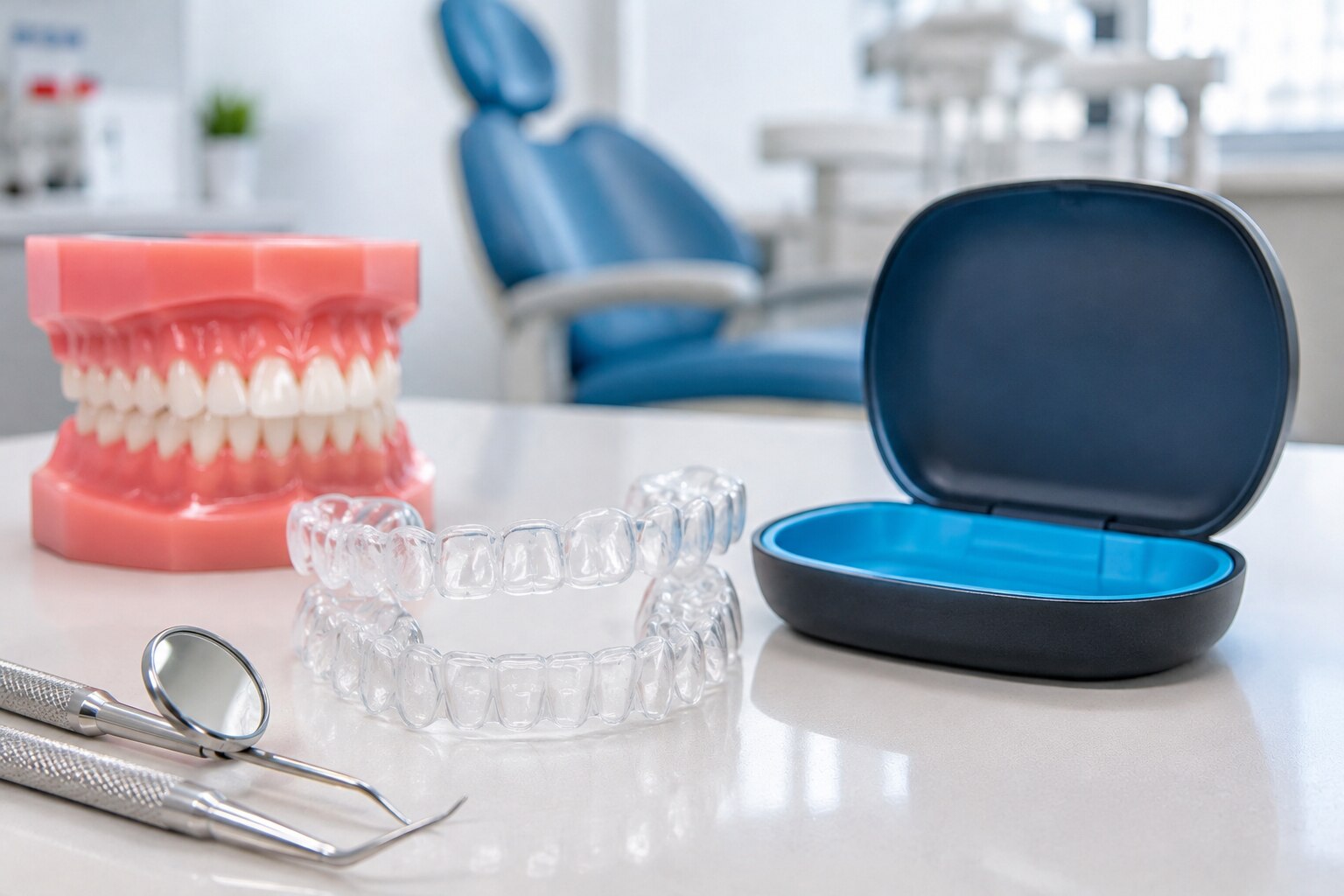
Clear aligners are transparent and removable, so you can take them out for meals, photos or important presentations. That flexibility comes with a strict condition: wear them for about 20–22 hours daily, or missed wear can delay tooth movement and extend treatment.
| Option | Visibility and flexibility | Trade-off |
|---|---|---|
| Invisalign clear aligners | Nearly invisible and removable for eating and brushing | Requires disciplined wear and may need attachments or refinements |
| Metal braces | Visible and fixed, with continuous force | Food restrictions and more involved cleaning, but strong control of difficult movements |
| Ceramic braces | Less noticeable than metal braces but still fixed | Remain visible and retain the same eating and cleaning demands |
The attraction is therefore practical, not merely cosmetic. You can maintain normal meals and oral hygiene more easily, while reducing the visual impact during work, study and social occasions.
Clear aligners are not the right answer for every bite. Severe jaw discrepancies, impacted teeth, weak periodontal support or extensive movements may require fixed appliances, specialist treatment or jaw surgery. A clinical examination must decide whether Invisalign suits your teeth rather than letting appearance make the decision alone.
Invisalign versus metal and ceramic braces: the practical trade-off
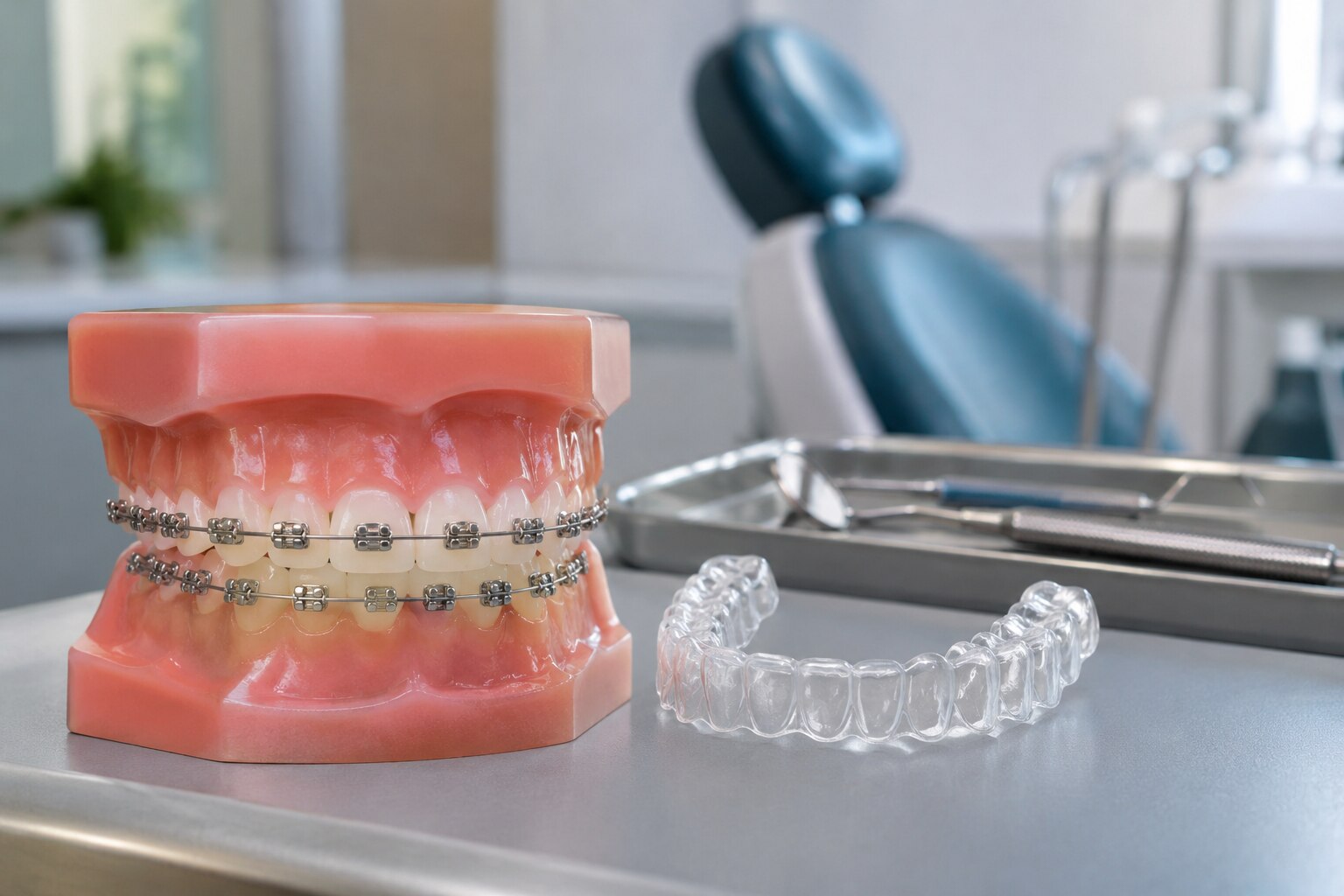
Invisalign vs braces comes down to convenience versus continuous control. Clear aligners are nearly invisible and removable, while metal braces remain the most visible option. Ceramic braces blend more closely with tooth colour, but their brackets and wires still show.
| Option | Visibility and daily use | Food, cleaning and speech | Appointments and movement control |
|---|---|---|---|
| Invisalign | Least noticeable; remove it for meals and wear it about 20–22 hours daily | No eating restrictions with braces because there are no brackets, but remove trays for anything except water; brush before reinserting when possible. A short-lived lisp can occur | Reviews check tracking and provide new trays. Attachments, elastics or refinements may be needed for rotations, root torque, extrusion or bodily movement |
| Metal braces | Most visible; fixed throughout treatment | Avoid hard, sticky foods because they can bend wires or loosen brackets. Brushing and interdental cleaning take more time; speech changes are uncommon | Regular adjustment visits maintain wire control. Fixed appliances provide strong, continuous control of difficult movements |
| Ceramic braces | Less conspicuous than metal braces, but brackets and wires remain visible | The same eating restrictions with braces apply. Clear or tooth-coloured elastics can stain; cleaning around brackets requires care | Follow-up and movement control resemble metal braces, with the same advantage for complex corrections |
Aligners do not automatically finish sooner. Lost trays, missed reviews, inconsistent wear and poor tracking can add refinements and extend treatment. Fixed appliances also demand appointments, but they do not depend on remembering to wear them after every meal.
The daily routine that determines whether aligners work
The target is 20 to 22 hours wear time every day. Remove the aligners only for meals, anything besides plain water, and brushing or interdental cleaning; prolonged removal leaves too little time for the planned force and can delay tooth movement.
- Put the aligners back immediately after cleaning your teeth. Sugary or acidic drinks trapped under a tray increase the risk of decay and enamel erosion.
- Follow the prescribed tray-change date rather than changing early because a tray feels loose. The next aligner is designed for a specific sequence of movements.
- Rinse trays with cool or lukewarm water and complete your aligner cleaning as instructed. Hot water can distort the plastic.
- Practise storing aligners in their ventilated case whenever they are out of your mouth. A wrapped tray is easy to throw away with a meal, while a loose tray can collect bacteria or be damaged.
- Attend progress reviews, even when the trays feel comfortable. Your clinician must check whether attachments remain secure and whether teeth are tracking the plan.
If you forget to wear a tray, reinsert it when you remember and avoid compensating by wearing two trays. If it no longer fits comfortably, contact your provider before changing trays or extending the schedule.
After a lost aligner tray, do not automatically advance to the next one. Keep the previous tray if you have it, then ask the clinic whether to wear it temporarily, replace the lost tray, or proceed to the next stage. A replacement, scan, or refinement can affect both timing and cost.
Who is a suitable candidate, and what the assessment must check
Invisalign candidacy is strongest when you have mild-to-moderate crowding or spacing, healthy gums, and a bite that does not require major skeletal correction. Clear aligners are removable and discreet, but they depend on consistent wear and do not control every movement equally well.
| Option | More suitable when | Main limitation |
|---|---|---|
| Clear aligners | You need modest alignment, have good oral hygiene, and will wear trays as directed | Severe tooth rotations, extrusion, root torque and bodily movement can be less predictable |
| Fixed appliances | Teeth need continuous force, substantial rotation, vertical correction or complex bite control | Brackets remain in place, making eating and cleaning more demanding |
| Specialist treatment or combined care | There is a jaw discrepancy, impacted teeth, major skeletal imbalance or a need for growth modification | Aligners alone cannot correct the underlying problem |
Before treatment begins, request a full orthodontic assessment rather than relying on a digital scan alone. The clinician should complete:
- Examine your teeth, bite, facial symmetry and jaw relationships, including overbite, overjet and crossbite.
- Check for active decay, gum inflammation, attachment loss, loose teeth and inadequate periodontal support. Treat these problems before moving teeth through inflamed gums.
- Review dental and medical history, previous orthodontic treatment, habits and expected growth in teenagers.
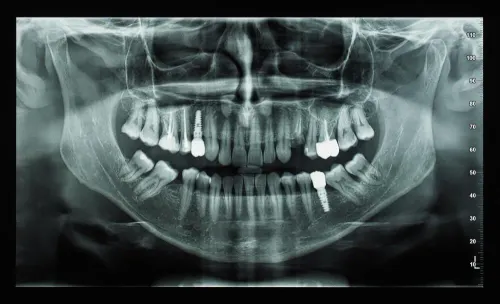
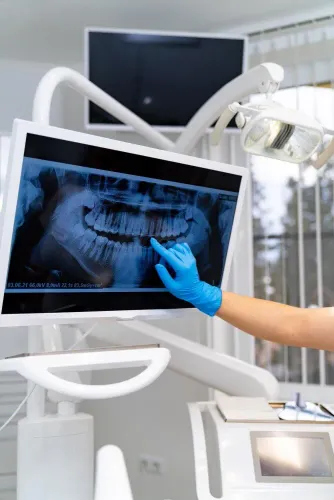
- Take photographs, a digital scan or impressions, and appropriate radiographs. A panoramic X-ray can reveal unerupted or impacted teeth; a lateral cephalometric X-ray helps assess jaw discrepancy when indicated.
- Explain which movements need attachments, interproximal reduction, elastics or fixed appliances, and what happens if a planned movement does not occur.
What to ask a Rohini clinic before you commit
A low headline fee tells you little. Compare the written treatment scope, clinician oversight and fallback plan before comparing the aligner treatment cost.
Ask who will diagnose you, review radiographs and approve the digital plan. The responsible clinician should be a named registered dentist or orthodontist, not only a treatment coordinator. Ask how often progress checks occur, whether reviews are in person, and who handles broken attachments or a tray that no longer fits.
Use this comparison when speaking with clinics in Rohini:
| Question | Strong answer | Warning sign |
|---|---|---|
| Total cost | Includes scans, radiographs, attachments, interproximal reduction, refinement trays, emergency visits and retainers | Only a package price or per-tray fee |
| Supervision | Named clinician examines you and checks tracking at scheduled reviews | Remote approval with no clear reviewer |
| Failed movement | Explains when to rescan, revise the plan, add elastics or switch to fixed braces | “The software will solve it” without a clinical review |
- Ask whether cavities, gum disease or poor periodontal support must be treated before tooth movement.
- Ask how many refinement trays are included, and whether extra scans cost more.
- Ask who pays when attachments detach, trays are lost or a tooth fails to track.
- Ask whether retainers are included, which type you receive, and the replacement charge.
Whether you consult Dr Batra's Dental or another clinic, request these answers in writing. A plan that names the attachments, expected interproximal reduction and retention stage is easier to compare than a promise based only on the advertised number of trays.
Related services
Invisalign Invisalign Achieve a straighter, more confident smile with Invisalign treatments at Dr Batra's Dental. |
Fixed Ortho(Braces) Achieve a well-aligned and confident smile with Fixed Orthodontic Braces at Dr. Batra's Dental Clinic. View service → |
Frequently asked questions
Why does Invisalign suit busy people in Rohini?
Clear aligners are less noticeable during work, college, coaching classes, commuting and social events. You can remove them for meals and important occasions.
How does Invisalign compare with metal and ceramic braces?
Invisalign is discreet and removable but depends on consistent wear. Metal braces stay fixed and handle many movements predictably, while ceramic braces are less noticeable but remain fixed.
What daily routine helps Invisalign work effectively?
Wear each aligner for the schedule prescribed by your orthodontist, remove it for eating, brush before replacing it, and clean the aligner as directed.
What should a Rohini clinic check before recommending Invisalign?
The assessment should examine your teeth, gums, bite, jaw relationship, X-rays or scans, crowding, spacing and the movements your treatment requires.
Keywords