The X-ray exposure itself does not normally cause pain, so soreness afterward usually comes from the sensor, bite block, jaw position, or the dental problem being investigated. You will learn how long routine discomfort should last, which warning signs need dental or emergency care, and what to ask when arranging imaging in Delhi.
Key takeaways
- The X-ray exposure itself does not cause immediate pain or tissue injury.
- Positioning soreness usually affects the jaw, cheek, or gums and settles after imaging.
- Persistent or worsening pain can indicate an untreated tooth, gum, or jaw problem.
- Ask about sensor comfort, positioning time, and machine type before booking a digital OPG.
Can a dental X-ray itself cause pain?
X-rays do not create an immediate painful sensation or tissue injury at the exposure levels used for routine dental imaging. You cannot feel the exposure itself, so pain after a dental X ray in Delhi usually comes from positioning, an existing dental problem, or treatment performed at the same appointment.
The sensor or film can press against the gums, palate, or floor of the mouth. A holder may stretch the cheek; biting the receptor, opening widely, or keeping your head and jaw still can also produce dental X-ray discomfort.
Digital imaging is not radiation-free: it still uses ionising radiation, although digital systems can use less exposure than older film methods. Dose depends on the image type, equipment, settings, field of view, and repeat images.
Use this timing guide:
- A tender spot that stays near the pressure point and improves within a few hours fits positioning soreness.
- Pain that remains into the next day, worsens, or starts away from the pressure point needs dental assessment.
- Before imaging, report ulcers, inflamed gums, a strong gag reflex, a small mouth, limited opening, or severe toothache. The operator can adjust the receptor or positioning.
Pain beginning after a filling, extraction, injection, implant procedure, or another treatment deserves separate discussion with the dentist. Tell them exactly when it started.
Why an OPG can feel different from an intraoral X-ray
The image type changes where dental X-ray discomfort comes from. Bitewing, periapical and occlusal X-rays place a sensor or film inside your mouth, so soreness usually comes from pressure on a sensitive area.
- Bitewing images press the receptor against the gums beside the back teeth.
- Periapical images can press against an inflamed gum or painful tooth.
- Occlusal images rest against the palate or floor of the mouth.
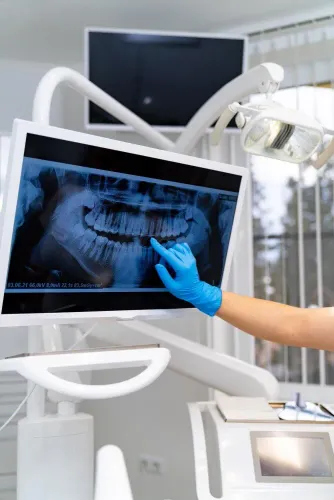
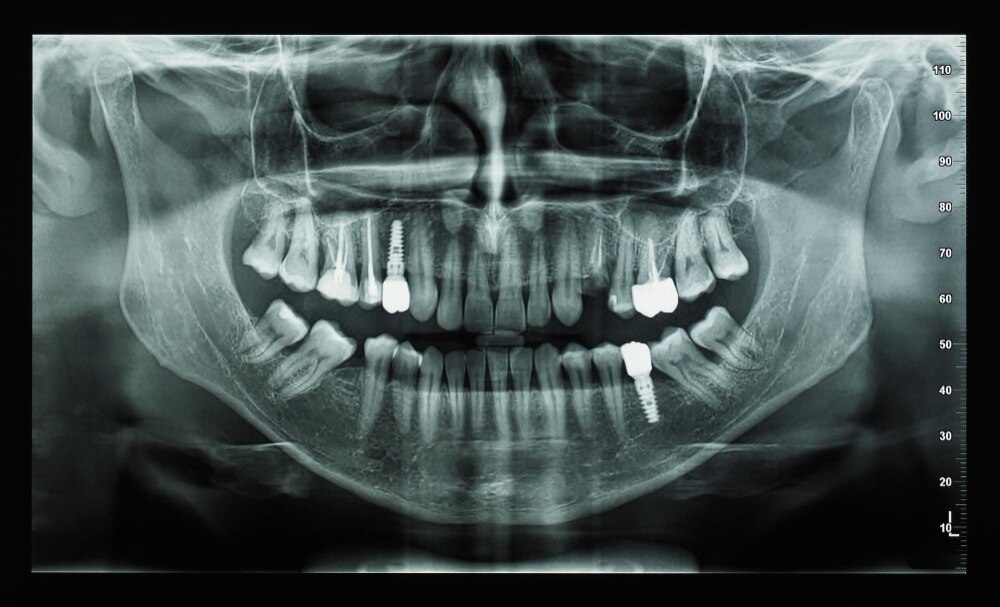
A panoramic image, commonly called an OPG, uses a bite-positioning device rather than an intraoral sensor. You keep your teeth, head and jaw in one position while the unit rotates around your head. Holding that position can strain the jaw muscles or aggravate an existing temporomandibular-joint problem.
Jaw pain after dental X ray is more suggestive of muscle or joint strain when it sits in front of the ear or in the cheek, worsens with chewing or wide opening, or comes with clicking, stiffness or restricted opening.
That pattern points to positioning strain rather than radiation; you cannot feel the X-rays during exposure.
An OPG provides a broad view of the teeth, jaws and temporomandibular joints, but it does not show fine detail on every tooth surface. Your dentist may still need bitewing or periapical images to assess decay between teeth, a filling edge or the area around a tooth root.
How can you tell positioning soreness from a dental problem?
Positioning soreness stays near the spot pressed by the sensor, film or holder and gradually eases. Persistent, focused tooth pain points more toward deep decay, pulp inflammation, a cracked tooth, infection around the root or an abscess. Gum tenderness or bleeding, a wisdom-tooth problem, and a temporomandibular-joint disorder can also be responsible.
Describe exactly what brings the pain on:
- Pain when you bite can indicate a cracked tooth, inflammation around the root or a problem with a recent filling.
- Pain from hot or cold drinks can indicate decay close to the pulp or pulp inflammation.
- Pain when you open your mouth, chew or notice clicking, stiffness or limited movement supports jaw-muscle or temporomandibular-joint strain. Jaw pain after dental X ray located in front of the ear or cheek fits this pattern.
- Pain when you touch the gum, or swelling, bleeding, pus or a bad taste, needs dental assessment for gum disease or infection.
- Pain that worsens when you lie down, throbs or continues into the next day is less consistent with a brief pressure injury.
The X-ray is diagnostic; it does not remove the source of pain. If you had a filling, extraction, injection, implant procedure or other treatment at the same appointment, that timing matters more than the image. Contact the treating dentist and state exactly when symptoms began and which trigger reproduces them.
What should you do after imaging, and when should you seek care?
Remove pressure from the tender area and let the mouth rest. If chewing hurts, choose soft foods and avoid forcing your mouth wide open. For muscle soreness near the jaw, place a warm compress against the cheek. Take pain medicine only if it is safe for you, following the label or your clinician’s instructions exactly.
- Contact a dental clinic promptly if pain increases, does not improve, or comes with facial or gum swelling, fever, pus, a bad taste, numbness, or restricted mouth opening.
- Tell the dentist whether symptoms began after a filling, extraction, injection, implant procedure, or another treatment at the same visit. The treatment may explain the pain after a dental X ray in Delhi more than the imaging itself.
- Seek the nearest emergency department in Delhi for trouble breathing or swallowing, rapidly increasing facial or neck swelling, or swelling that extends toward the eye.
| Symptom pattern | What it suggests | What to do |
|---|---|---|
| Tender spot that gradually eases | Positioning soreness from an intraoral sensor or holder | Rest the area and monitor improvement |
| Jaw pain near the ear, worse with chewing or wide opening | Muscle or temporomandibular-joint strain | Use a warm compress and arrange dental review if it persists |
| Increasing pain, swelling, fever, pus or bad taste | Infection or another active dental problem | Contact a dental clinic promptly |
| Breathing or swallowing difficulty, or fast-spreading swelling | Emergency condition | Go to the nearest emergency department immediately |
What should you ask before booking a digital OPG in Delhi?
Before booking a digital OPG in Delhi, ask what clinical question the dentist needs answered and whether an examination should come first. Pain after a dental X ray in Delhi may reflect an existing tooth, gum or jaw problem rather than the scan.
Ask these questions when you contact the clinic:
- Is a panoramic image necessary, or would a bitewing, periapical image or additional view show the suspected problem better?
- How will you position me if my gum is sore, my mouth does not open fully, I have a strong gag reflex or my jaw joint hurts?
- Did pain begin after a filling, extraction, injection, implant procedure or another treatment at the same visit? Tell the dentist exactly when it started and whether biting, temperature, mouth opening or gum contact triggers it.
| Option | What it shows best | Important limitation |
|---|---|---|
| Digital OPG | Jaw, teeth, wisdom teeth and broader bone pattern | Fine tooth or root detail can be obscured |
| Bitewing | Crowns and decay between back teeth | Does not show the full tooth root |
| Periapical image | One tooth from crown to root tip | Covers a smaller area |
“Digital” does not mean radiation-free. Exposure depends on image type, equipment, settings, field of view and repeat images; the useful benefit is an appropriate image without unnecessary repeats.
Dr Batra's Dental can help a Delhi patient decide whether panoramic imaging fits the referral or whether examination and another view should come first.
Related service
Radiology At Dr. Batra's Dental Clinic, we offer advanced Digital OPG (Orthopantomogram) and Digital X-Ray services for accurate, fast, and safe dental... View service → |
Frequently asked questions
Can a dental X-ray itself cause pain?
No. Routine dental X-ray exposure is not felt and does not cause immediate tissue injury. Discomfort usually comes from positioning or an existing problem.
Why can an OPG feel different from an intraoral X-ray?
An OPG is taken while you stand or sit with your head held in a panoramic machine. An intraoral X-ray places a sensor inside your mouth, which can press against tender gums or teeth.
How can you tell positioning soreness from a dental problem?
Positioning soreness affects areas held against the sensor or supports and should improve. Pain that is severe, localised, persistent, or triggered by biting, heat, or cold needs dental assessment.
What should you do after imaging, and when should you seek care?
Rinse gently, avoid repeatedly pressing the sore area, and use a suitable pain reliever according to its label. Seek care for swelling, fever, severe pain, difficulty opening your mouth, or trouble swallowing.
What should you ask before booking a digital OPG in Delhi?
Ask which areas the scan covers, how long positioning takes, whether the machine is digital, and how staff will accommodate gagging, limited jaw opening, pregnancy, or jaw tenderness.
Keywords