Oral surgery usually starts with a medical review and diagnosis, not an immediate procedure. Knowing what happens at each stage will help you prepare your records, compare anaesthesia options, understand consent and recovery instructions, and recognise symptoms that need urgent care.
Key takeaways
- Expect an assessment before extraction or other oral surgery.
- Bring your medication list and full medical history to the consultation.
- Ask why the procedure is needed and which anaesthesia option is planned.
- Confirm recovery instructions, follow-up timing and emergency contact details.
Before the Procedure: Booking, Medical Review and Examination
Your first appointment is usually an assessment, not an immediate extraction. During an oral surgery consultation in Delhi, the clinician confirms what is causing the problem, checks your medical risks and decides whether further imaging or specialist referral is needed.
1. Bring a list of every medicine and supplement you take, including aspirin, warfarin, apixaban, clopidogrel, diabetes medicines and herbal products. Carry previous dental X-rays or CBCT scans, medical reports, allergy details and the contact information for your physician if you have a significant condition.
2. Expect questions about diabetes, high blood pressure, pregnancy or possible pregnancy, bleeding disorders, heart disease, kidney disease, previous operations and complications with local anaesthesia or sedation. State the truth about smoking, alcohol use and any past excessive bleeding.
3. The examination may include checking your teeth and gums, periodontal probing, tooth mobility, your bite, mouth opening, facial swelling and numbness or tingling. The clinician may feel your neck and jaw when infection or a nerve problem is suspected.
4. Ask which exact procedure is being considered, whether observation or another treatment is possible, what the main risks are, and who will perform it. Deep impactions, extensive infection, suspected jaw lesions, significant nerve risk or complex medical conditions can justify referral to an oral and maxillofacial surgeon or hospital.
Do not wait for a routine appointment if you have facial or neck swelling, difficulty breathing or swallowing, uncontrolled bleeding, confusion, high fever or rapidly worsening symptoms. These signs need urgent assessment.
Which Procedure Is Planned—and Why?
The dentist chooses observation, root canal treatment, periodontal treatment, extraction or another operation by identifying the source of damage, whether the tooth can be restored, and the risks of leaving it untreated. Pain alone does not make extraction the best answer.
| Option | What it means | When it applies |
|---|---|---|
| Observation | Monitor the tooth with hygiene advice and review | A small, symptom-free lesion, stable crack or impacted tooth causes no disease and has no high-risk features |
| Root canal treatment | Remove infected pulp, clean the canals and seal them before restoring the tooth | The tooth is structurally restorable but decay, trauma or leakage has irreversibly damaged the pulp |
| Periodontal treatment | Clean infected root surfaces and treat the supporting gum and bone | Gum pockets, bleeding, bone loss or tooth mobility are driving the problem |
| Extraction | Remove the whole tooth, followed by a replacement discussion when needed | The tooth cannot be predictably restored, has a vertical root fracture, or causes repeated infection |
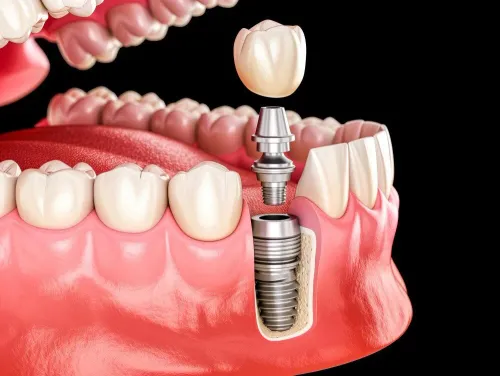
| Other oral surgery | Perform a targeted operation such as impacted-tooth removal, biopsy, abscess drainage, implant placement or gum surgery | A tooth, lesion, infection or missing-tooth site requires surgical access |
The decision combines examination findings, tooth mobility, gum measurements, bite, nerve symptoms, medical history and imaging. The dentist should explain the alternatives, including no treatment, expected benefit, material risks and the likely recovery.
Ask which exact procedure is planned, whether bone removal or tooth sectioning is expected, and who will provide follow-up. The oral surgery treatment steps can include antiseptic preparation, local anaesthetic, surgical access, irrigation, bleeding control and sutures; a simple extraction does not involve every step.
Imaging, Consent and Anaesthesia Choices
A panoramic X-ray is usually enough for multiple teeth, an impacted wisdom tooth or a broad jaw assessment. Choose a CBCT scan when a two-dimensional image cannot show a critical relationship clearly, such as a lower wisdom tooth near the inferior alveolar nerve.
CBCT gives three-dimensional detail but exposes you to more radiation, so it is not an automatic upgrade.
Consent must cover:
- The planned procedure and its expected benefit
- Alternatives, including observation, another treatment or no treatment
- Material risks, recovery demands and possible need for referral
- For lower wisdom-tooth removal: pain, swelling, infection, dry socket, bleeding, limited mouth opening and temporary or persistent lingual or inferior alveolar nerve injury
The oral surgery process in Delhi changes substantially with the anaesthesia plan.
| Option | What you experience | What you must arrange |
|---|---|---|
| Local anaesthesia | You stay awake and lose sharp pain, but pressure, pulling, vibration and sounds remain | Follow medicine instructions and plan your journey home |
| Sedation | Anxiety and awareness reduce; sedation is not general anaesthesia | Follow the anaesthesia team’s fasting instructions, arrange an escort and do not drive |
| General anaesthesia | You are unconscious and require airway, vital-sign monitoring and recovery observation | Follow exact fasting and medication instructions; an escort is essential |
Do not improvise fasting or blood-thinner instructions. Diabetes, anticoagulants and other conditions alter the plan. Deep impactions, extensive infection, suspected jaw lesions, major nerve risk or a need for general anaesthesia may require an oral and maxillofacial surgeon or hospital.
What Happens in the Operating Room
Sharp pain is not expected once local anaesthetic has taken effect. You will feel the injection, followed by pushing, pressure, vibration and movement as the dentist works; tell the team immediately if you feel pain rather than pressure.
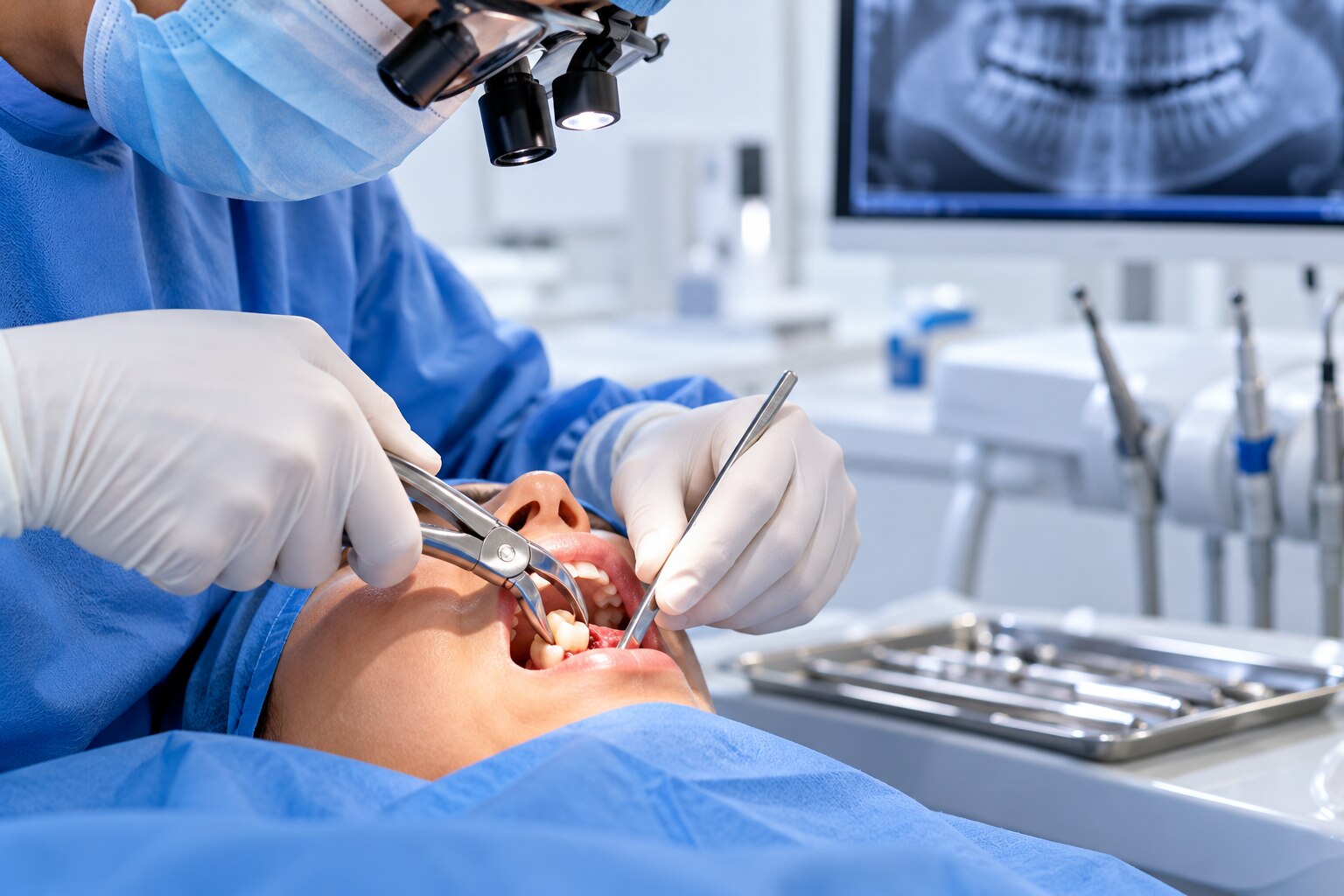
- The team cleans the mouth with antiseptic, places sterile drapes and checks the anaesthetised area. They use instruments such as elevators, forceps, retractors, suction and a dental handpiece.
- For a simple extraction, the dentist loosens and removes the tooth. An impacted wisdom tooth may require a gum flap, removal of a small amount of bone and tooth sectioning so each piece comes out safely. This is not the same as forceps extraction.
- The dentist irrigates the area, removes debris and controls bleeding with gauze or other measures. Stitches close the gum when a flap was raised, tissue was removed or the wound needs support; some stitches dissolve, while others need removal.
- Ask for the expected operating time before treatment begins. A simple extraction may be brief, while impacted-tooth surgery, implant placement, biopsy or gum surgery takes longer because the access and closure differ.
- After dental surgery in Delhi, staff check bleeding, alertness and vital signs before discharge. If you received sedation or general anaesthesia, arrange an escort and do not drive; follow the anaesthesia team’s fasting, medication and transport instructions. You should leave with written advice, prescribed medicines and a follow-up plan.
Recovery, Follow-Up and Choosing the Right Clinic
Pain and swelling often peak 48 to 72 hours after surgery, then ease. Follow your written instructions: take prescribed analgesics, use a cold pack against the cheek, eat soft foods, avoid smoking and alcohol, and brush gently around the site. Never place aspirin on the gum; it can burn tissue and worsen bleeding.
Ask the oral surgery clinic in Delhi to record the oral surgery treatment steps, medication schedule and review date before discharge. Contact the clinic promptly if pain intensifies after initial improvement, swelling continues to expand, pus or a foul taste appears, fever develops, or you cannot open your mouth normally.
| Symptom | Usually expected | Urgent action |
|---|---|---|
| Pain or swelling | Increases for 48–72 hours, then improves | Call if rapidly worsening or uncontrolled |
| Bleeding | Mild oozing that settles with firm gauze pressure | Seek urgent care for persistent heavy bleeding |
| Numbness | Temporary tingling after local anaesthetic | Report lasting or worsening tongue, lip or chin numbness |
| Breathing or swallowing | Mild soreness after treatment | Go to a hospital immediately for difficulty breathing or swallowing |
A Delhi clinic should refer deep impactions, suspected jaw lesions, extensive infection, significant nerve risk, medically complex patients, or cases needing deep sedation or general anaesthesia to an oral and maxillofacial surgeon or hospital.
Facial or neck swelling, confusion, inability to open the mouth, high fever, or airway symptoms need emergency assessment, not a routine appointment.
When comparing Dr Batra's Dental with another clinic, ask who handles complications, where hospital referral occurs, and whether follow-up is included.
Related services
Oral Surgeries At Dr. Batra's Dental Clinic, we provide safe and advanced oral surgical procedures tailored to your individual dental needs. View service → |
Radiology At Dr. Batra's Dental Clinic, we offer advanced Digital OPG (Orthopantomogram) and Digital X-Ray services for accurate, fast, and safe dental... View service → |
Frequently asked questions
What happens during an oral surgery consultation in Delhi?
The clinician reviews your symptoms and medical history, examines your mouth, identifies the likely cause and decides whether imaging or specialist referral is needed.
How do I know which oral surgery procedure is planned?
Ask the clinician to name the procedure, explain the problem it will address and describe alternatives, risks and expected benefits.
Why are imaging and consent needed before dental surgery?
Imaging helps assess tooth position, bone and nearby structures. Consent confirms that you understand the planned procedure, anaesthesia, risks and alternatives.
What should I expect during recovery after oral surgery?
You receive instructions for protecting the surgical site, managing discomfort, eating and cleaning your mouth, along with a follow-up plan and guidance on when to seek urgent help.
Keywords