Your first visit should do more than produce a digital scan: it should establish whether your teeth, gums, bite and previous dental work are ready for aligner treatment. By following each stage from records and planning through wear, reviews, refinements and retention, you can prepare for appointments and know which decisions require your clinician’s explanation.
Key takeaways
- Allow 45 to 90 minutes for your first Invisalign consultation.
- Ask how scans, X-rays and bite records determine your proposed treatment plan.
- Wear aligners for the prescribed daily hours and remove them for meals.
- Plan for reviews, refinements and retainers after active tooth movement ends.
Your First Invisalign Consultation: Examination, Records and Suitability
Plan roughly 45 to 90 minutes for your first Invisalign consultation in Delhi. Complex dental histories, additional X-rays or a detailed bite assessment can extend the visit, so do not schedule it between tight appointments.
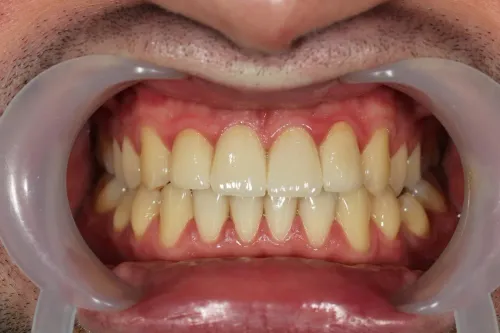
The Invisalign appointment process starts with your medical and dental history, previous orthodontic treatment, medications, allergies and your goals. The clinician examines your teeth, gums, bite and jaw relationship, checking for cavities, gum disease, inadequate space, impacted teeth, jaw discrepancies and dental work that could affect treatment.
Records usually include clinical photographs and an intraoral scan or impressions. The clinician orders radiographs when the examination indicates a need to assess roots, bone levels, impacted teeth or jaw structure. A scan alone cannot show every problem or confirm that aligners are suitable.
Bring these items to the appointment:
- A list of medicines, allergies and relevant medical conditions
- Recent dental X-rays, reports and details of previous orthodontic treatment
- Your main concerns, preferred outcome and questions about wear time, attachments, refinements and retainers
- Details of any crowns, bridges, implants or fillings
Ask who will diagnose your case, review progress, manage problems and provide retention. Check that this clinician has valid dental registration and relevant orthodontic training or experience, rather than choosing a clinic only because it advertises clear aligners. The consultation should end with a suitability discussion, not a pressure to approve treatment immediately.
From Scans to a Proposed 3D Treatment Plan
A scan does not create the treatment plan by itself. The clinician combines your intraoral scan or impressions, facial and dental photographs, bite records, examination findings and X-rays when clinically indicated.
Planning software then models a proposed sequence: which teeth move, in what order, and how the upper and lower arches should meet at the end.
Before approving the simulation, check these points:
- Compare the proposed final bite with your starting bite. Ask how crowding, spacing, rotations, overbite and crossbite will change, not just how the front teeth will look.
- Identify every planned attachment, elastic and interproximal reduction (IPR). IPR removes a controlled amount of enamel between selected teeth to create space; it is not an extraction.
- Ask which movements are less predictable, such as difficult rotations or root control, and what happens if teeth do not track. The displayed result is a target, not a guarantee.
- Confirm whether X-rays show impacted teeth, root concerns, bone limitations or other problems that alter the plan.
- Get the estimated number of aligners, review schedule, likely refinement scans and retainer plan in writing.
For anyone comparing an Invisalign provider in Delhi, ask who will diagnose you, review movement and handle complications—not merely who supplies the trays. At Dr Batra's Dental, clarify the clinician responsible for each of those decisions before accepting the proposed Invisalign treatment process in Delhi.
Related service
Invisalign Invisalign Achieve a straighter, more confident smile with Invisalign treatments at Dr Batra's Dental. |
Fitting the Aligners and Following the Daily Wear Routine
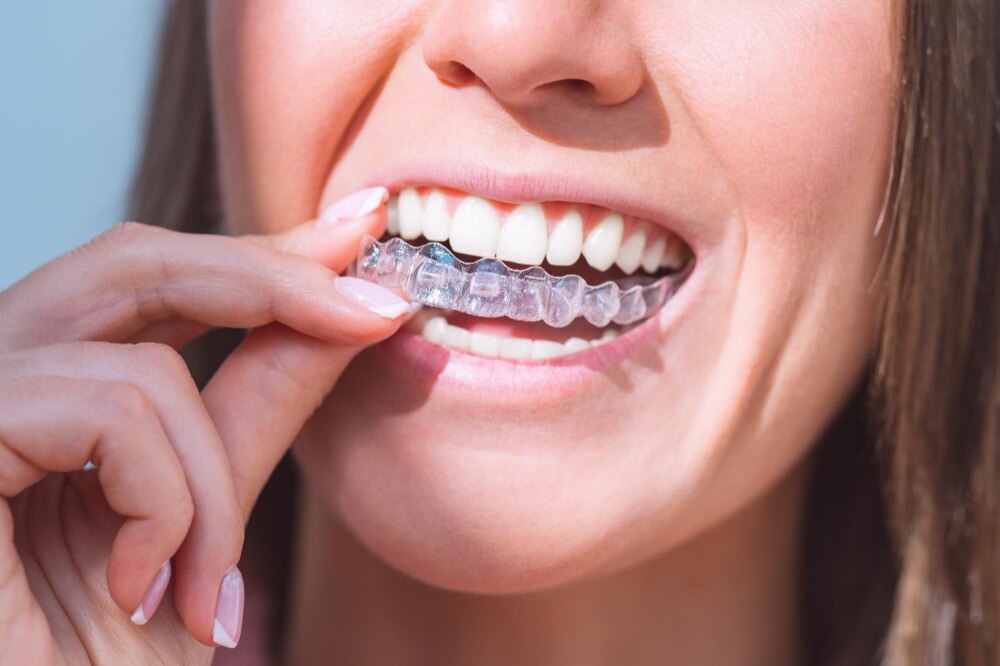
The first fitting checks whether the aligner seats fully over every planned tooth and attachment. Your clinician will place it, press it into position, inspect the edges and bite, and ask whether any area feels sharp or excessively tight.
A tray that rocks, lifts or leaves a visible gap needs attention before you move to the next one.
You will be shown how to:
- Remove the aligner from the back teeth, not by pulling one front corner
- Seat it with your fingers and use chewies if advised
- Wear it for about 20–22 hours each day
- Remove it for meals, drinks other than water and brushing
Your clinician will give you a change schedule, commonly one new aligner every 7–14 days. Do not independently skip ahead: a poorly fitting or lost tray can disrupt tracking. These instructions form a practical part of the Invisalign treatment steps.
Attachments are small, tooth-coloured composite shapes bonded to selected teeth. They give the tray a grip or force point for movements such as rotation, extrusion or root control; they are not placed on every tooth automatically.
If the plan includes interproximal reduction, the clinician uses a fine strip or disc to remove a controlled amount of enamel between specified teeth. It creates limited space and is not the same as extracting a tooth.
Elastics, when prescribed, connect hooks or buttons on the aligners to guide bite correction; confirm their exact hook points, hours of wear and replacement frequency.
Wear, Reviews and Refinements During Active Treatment
Aim for 20 to 22 hours of wear each day. Remove the aligner only for meals, drinks other than water, brushing and flossing; clean it with cool or lukewarm water and a soft toothbrush, then store it in its case while it is out.
Use this daily checklist between visits:
- Put the aligners back immediately after eating or cleaning your teeth.
- Check that both trays are fully seated, especially around attachments and back teeth.
- Use the prescribed chewies if your clinician supplied them, and never bite the trays into place with force.
- Keep the aligners away from hot water, which can distort the plastic.
- Change to the next pair only on the date provided in your Invisalign appointment process.
Missing several hours once rarely requires panic, but repeated part-time wear can leave trays loose, prevent teeth from tracking and lengthen the Invisalign treatment process in Delhi. Do not independently skip to the next aligner.
Wear the current tray and contact the clinic if it no longer fits, is lost or is damaged; your clinician may advise repeating a stage or using a replacement.
Review visits check more than whether the next box is ready. The clinician examines:
- Tray fit and whether each tooth is following the planned movement
- Attachments, elastics and any needed adjustments
- Gums, plaque, cavities and signs of irritation
- Your bite and contact between upper and lower teeth
Report persistent pain, a sharp edge or a loose attachment before the next scheduled review.
Finishing Active Treatment and Moving Into Retainers
Active treatment is complete when your clinician confirms that the teeth have reached the agreed functional and aesthetic goals, not simply when you finish the last numbered tray.
They compare your teeth with the approved digital plan, examine how the upper and lower teeth meet, check aligner tracking and attachment removal, and assess your smile, comfort and oral health. The number of aligners alone cannot predict the finishing date.
Refinement aligners are needed when the teeth have not followed the planned movements closely enough or the bite needs further adjustment. A new scan, photographs and bite assessment produce a revised sequence; wearing the original final tray helps hold the position while those aligners are made.
- Teeth remain visibly rotated, tilted or spaced.
- An attachment or planned movement has not tracked.
- The bite has premature contacts, an open area or an unresolved crossbite.
- The final tooth positions do not match the agreed treatment objectives.
Retention begins after the clinician accepts the result. Your Invisalign provider in Delhi chooses between removable retainers, a bonded wire behind selected teeth, or both, based on relapse risk and your bite. You may wear removable retainers full-time initially, then switch to night-time wear; follow the exact schedule given.
Retainers are a separate phase, not a short finishing step. Teeth can shift months or years later, so long-term night-time wear is commonly advised. Attend retention reviews, clean retainers as instructed, and report a loose wire, cracked tray or tight retainer promptly.
Frequently asked questions
How long does an Invisalign consultation in Delhi take?
Plan roughly 45 to 90 minutes. Complex dental histories, extra X-rays or a detailed bite assessment can extend the visit.
What happens during the Invisalign appointment process?
The process includes an examination, dental records, suitability assessment, digital scans, a proposed 3D plan, aligner fitting, review appointments and retainers.
What happens after the Invisalign scans?
Your scans are used to create a proposed 3D treatment plan showing planned tooth movements and the expected sequence of aligners.
How often are Invisalign reviews needed?
During active treatment, reviews check aligner fit, tooth movement and progress. Your provider sets the review schedule and orders refinements when tracking needs correction.
Do you need retainers after Invisalign treatment?
Yes. After active treatment, retainers hold teeth in their new positions and help reduce the risk of relapse.
Keywords