A crown or bridge that rocks, clicks, traps food or changes your bite needs attention even when it does not hurt. You will learn how to protect the restoration, recognise warning signs, and understand when recementation, repair or replacement is the safer choice.
Key takeaways
- Stop chewing on the loose side and save any detached crown or bridge.
- Book prompt dental care if pain, swelling, bleeding, or a sharp edge appears.
- A dentist must check the tooth, supporting teeth, cement, bite, and decay.
- Replacement is safer when the crown or bridge is damaged or the tooth has changed.
How to tell whether a crown or bridge is loose—and what to do first
A crown or bridge has likely moved if it rocks when you press it with your tongue or finger, clicks while chewing, or makes your bite feel different. Food trapping, new sensitivity, visible cement, a gap along the gumline, or a crown that comes off are also warning signs.
No pain does not prove the supporting tooth is healthy; decay or a crack can develop beneath the restoration.
A bridge can feel loose because only one end has detached. Do not assume the visible side is the only problem. Arrange an examination promptly, including assessment of the supporting teeth and dental radiographs when needed.
- Stop chewing on that side. Avoid hard, sticky foods and do not repeatedly click, twist, pull, or force the restoration back into position.
- If the crown or bridge has detached, rinse it gently with water, keep it in a clean container, and take it to the dentist. Do not wrap it in tissue, where it can be discarded accidentally.
- Never use superglue, household adhesive, or improvised cement. These products can injure soft tissue, damage the tooth, and prevent accurate recementation. A pharmacy dental-repair product is only a label-directed short-term measure.
- Book an assessment promptly, whether you searched for a loose dental crown in Delhi or a loose dental bridge in Delhi. The dentist must determine whether cement failed or the tooth, gum, bridge abutment, or restoration is damaged.
When does a loose crown or bridge need urgent care?
Facial swelling, fever, pus, severe or rapidly worsening pain, uncontrolled bleeding, or difficulty breathing or swallowing makes a loose restoration urgent. Go to emergency medical care for breathing difficulty, swallowing difficulty, spreading facial swelling, or a restoration that has been inhaled.
Seek urgent dental care for the other warning signs, inability to open your mouth, facial trauma, or a sharp broken edge.
Arrange prompt dental assessment even without pain. Decay under a crown or a fractured tooth can develop with few early symptoms. Searchers comparing a loose dental crown in Delhi or a loose dental bridge in Delhi should choose a clinic that can examine supporting teeth and take dental radiographs, not only offer same-day recementation.
- Do not force the restoration back into place.
- Keep a detached crown or bridge in a clean container.
- Do not use superglue, household adhesive, or improvised cement.
| Restoration | What the movement may involve | Why urgent assessment differs |
|---|---|---|
| Crown | One prepared tooth, its margin, or the remaining tooth structure | The dentist must check for recurrent decay, a crack, root infection, and whether the tooth can still support the crown. |
| Bridge | Two or more abutment teeth plus the connector and replacement tooth | Movement can signal decay or fracture in an abutment, a broken connector, or failure affecting several supporting structures; continued chewing can worsen the damage. |
How a dentist decides whether recementation or repair is safe
Recementation is safe only when the restoration still fits and the supporting tooth or teeth are sound. A dentist must identify why it loosened before choosing recementation, dental crown repair in Delhi, replacement or another treatment.
1. The dentist examines the crown or bridge for cracks, a worn or distorted edge, broken bridge connectors and an inaccurate fit. A restoration that rocks, leaves a gap or no longer seats fully cannot be predictably recemented.
2. The supporting tooth is checked for recurrent decay, adequate remaining tooth structure and a split or fractured root. Decay may require removal and a new crown; a split tooth may need extraction rather than repair.
3. The examination can include bite testing, periodontal probing and vitality testing. These checks look for excessive biting forces, gum or bone problems and a damaged or infected pulp beneath the restoration.
4. Dental radiographs help reveal decay hidden under margins, root infection, bone loss and fractures that an external examination cannot show. No pain does not rule out any of these problems.
5. The dentist checks the other bridge abutment and the bite, including clenching or grinding forces. A cement failure with an intact restoration may suit recementation, while repeated loosening calls for correction of the fit, bite or supporting tooth.
A temporary recementation is not automatically a final treatment. If the tooth needs root-canal treatment, a post-and-core restoration, a new crown or extraction, the dentist should complete that plan instead of sealing an unsafe foundation.
What happens during treatment, and when is replacement better?
Treatment choice follows examination, dental radiographs, restoration removal and bite testing—not simply the fact that the crown or bridge came loose. The dentist checks the supporting tooth, roots, gums, remaining tooth structure and the restoration’s internal surface.
A periapical radiograph can reveal decay, root infection or a fracture hidden under a crown; bridge assessment also covers each abutment tooth.
The appointment usually follows this sequence:
- Examination identifies decay, cracks, gum pockets, cement failure and signs of an unhealthy nerve.
- X-rays show what cannot be seen beneath the restoration or inside the roots.
- Careful removal allows inspection of the crown or bridge, its fit and the supporting teeth. A distorted restoration or a tooth with too little structure cannot be made reliable with cement alone.
- Bite checks reveal heavy contact or grinding forces that could loosen a repaired restoration again.
| Option | What it means | When it applies |
|---|---|---|
| Temporary recementation | The restoration is held briefly while healing, further tests or definitive treatment are arranged | The tooth or gums need attention, or the fit and cause of failure remain uncertain |
| Permanent recementation | The intact restoration is bonded back after cleaning and correcting the cause | The fit is accurate, the supports are healthy and the bite is manageable |
| Crown replacement | A new single-tooth restoration is made | Decay, fracture, poor fit or inadequate tooth structure prevents predictable reuse |
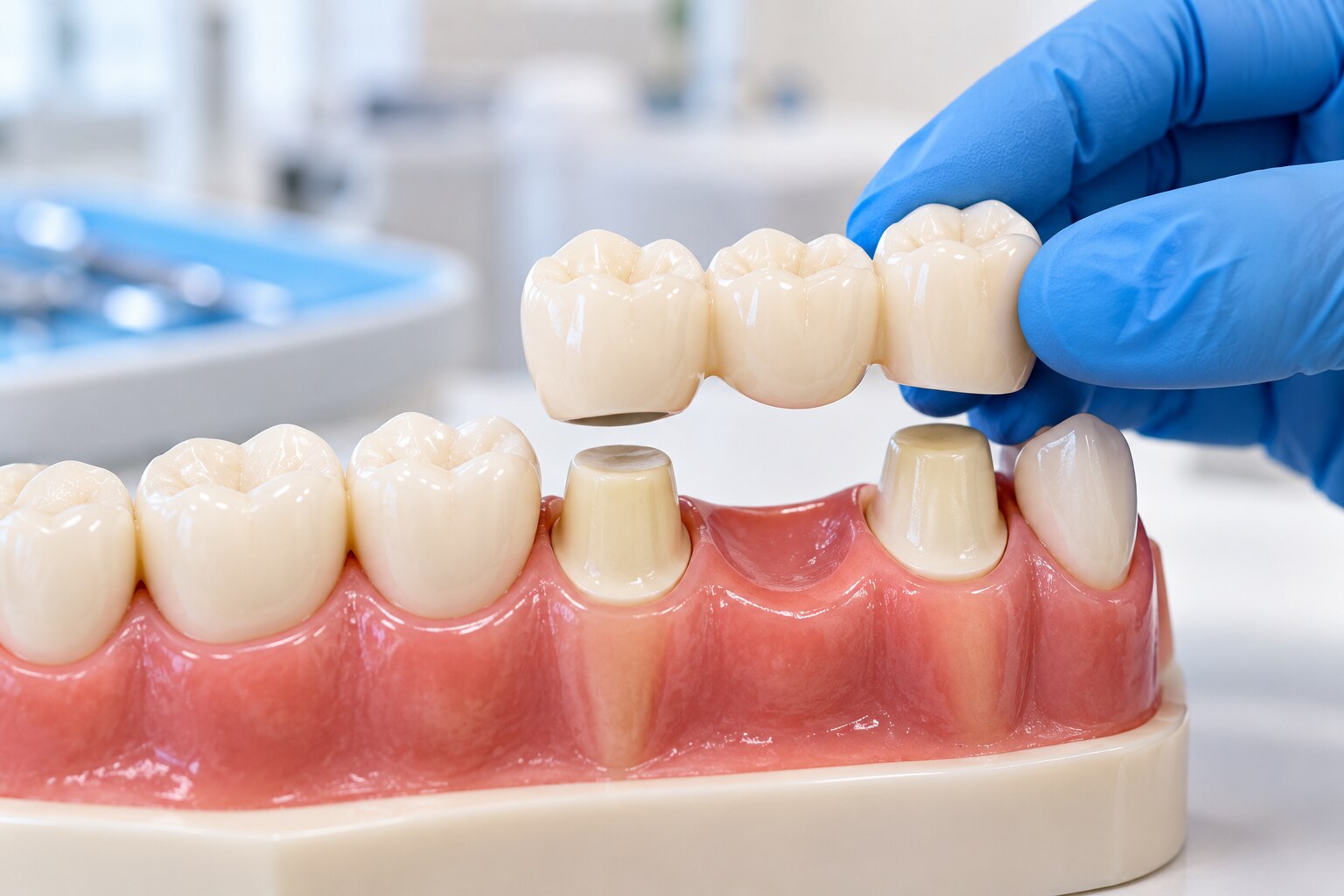
| Bridge replacement | A new bridge is designed for the supporting teeth | An abutment is compromised, the bridge is distorted or its design no longer fits |
A dental crown repair in Delhi can therefore end in recementation or replacement. Ask a crown replacement dentist in Delhi to explain the radiograph findings and why each supporting tooth can—or cannot—be preserved.
How to choose care in Delhi and reduce the chance of repeat loosening
Compare loose dental crown or bridge treatment in Delhi by the investigation offered, not by a promise of same-day recementation. Ask whether the clinic can examine the supporting tooth and take dental radiographs before deciding that the restoration is reusable.
| Option | What the dentist checks | When it fits |
|---|---|---|
| Recementation | Clean crown, sound tooth, acceptable fit and stable bite | Cement failure without decay or fracture |
| Dental crown repair in Delhi | Remaining tooth structure, decay, cracks, gum health and root condition | Repair is possible after removing the cause |
| Replacement planning | Fit, abutment teeth, bridge connector and bite forces | The crown or bridge no longer fits or cannot be restored predictably |
A crown replacement dentist in Delhi should explain why the restoration loosened. Ask about bruxism, recurrent decay, inadequate retention and an unfavourable bite; replacing the crown without correcting these causes invites another failure. Dr Batra's Dental is worth comparing when its examination covers supporting structures and bite assessment rather than offering recementation alone.
Protect the repaired restoration by:
- Chewing softer foods on the opposite side until the dentist confirms stability.
- Avoiding ice, hard sweets, popcorn kernels and sticky toffee.
- Cleaning around the gumline with a soft-bristled brush and flossing as instructed.
- Wearing a prescribed night guard if clenching or grinding contributed.
- Booking a review if rocking, clicking, food trapping or a changed bite returns.
Related service
Crown & Bridges(Scanning Via Scanner) Crown & Bridges(Scanning Via Scanner) At Dr. Batra's Dental Clinic, we restore damaged or missing teeth with high-quality dental crowns and bridges using advanced digital intraoral... View service → |
Frequently asked questions
How can you tell whether a crown or bridge is loose?
A loose crown or bridge may rock when pressed, click during chewing, change your bite, trap food, expose cement, create a gumline gap, or come off completely.
When does a loose crown or bridge need urgent care?
Seek urgent dental care for severe pain, facial swelling, fever, uncontrolled bleeding, a sharp exposed edge, trouble swallowing, or a crown or bridge that affects your bite.
Can a loose crown or bridge be recemented?
A dentist can recement it only after checking that the restoration, supporting tooth or teeth, margins, and bite remain suitable. Decay, fracture, poor fit, or damage requires another treatment.
When is crown or bridge replacement better than repair?
Replacement is better when the restoration is cracked, distorted, repeatedly loosening, poorly fitting, or no longer supported by a healthy tooth or implant.
How can you reduce the chance of a crown or bridge loosening again?
Avoid chewing ice and very hard foods, clean under bridges with floss threaders or interdental brushes, treat grinding, and attend examinations to detect decay or bite changes early.
Keywords