An implant decision depends on more than the number of missing teeth: your gums, bone, bite, health, habits, budget and ability to attend reviews all affect the result. By the end, you will know which examinations and documents to request, how to compare alternatives and quotes, and what ongoing care the treatment requires.
Key takeaways
- Check bone volume, gum health, remaining teeth and bite before choosing an implant.
- Ask which scans, medical records and dental treatments your plan requires.
- Compare implant brand, grafting, crown, follow-ups and guarantees in written quotes.
- Clean around the implant daily and attend professional reviews to protect nearby teeth.
Are you a suitable candidate for an implant?
An implant is appropriate now only when your jawbone volume, gum health, remaining teeth and bite can support it. After recent or long-standing tooth loss, the ridge may be too narrow or shallow without grafting.
Uncontrolled gum disease, untreated decay, active infection, poor hygiene or missed review appointments make placement the wrong immediate choice; treatment may become suitable later, or another option may be safer.
Your implant candidacy should include:
- The number, position and tooth-loss pattern, plus bite forces that could overload the restoration.
- Diabetes control, medicines, infection risk and your ability to attend follow-ups; there is no universal HbA1c cutoff for every patient.
- Smoking or tobacco use, osteoporosis medicines including bisphosphonates, blood thinners, pregnancy and previous radiation treatment.
- Your ability to brush, clean around the implant and maintain professional reviews.
Do not stop a medicine without instructions from the prescribing clinician and implant team.
| Option | When it may fit | Main trade-off |
|---|---|---|
| Fixed bridge | Adjacent teeth can support it and bone or surgery is unsuitable | Requires preparation of neighbouring teeth |
| Removable partial denture | Several missing teeth, limited bone, budget or medical concerns | Removable and may move during chewing |
| Complete denture | All teeth in an arch are missing | Avoids implant surgery but relies on fit and stability |
| Delayed replacement | Health, infection, hygiene or follow-up needs attention first | Leaves the gap temporarily while conditions improve |
A clinician should explain whether replacement is appropriate now, later or not at all.
Which examinations and medical details should planning include?
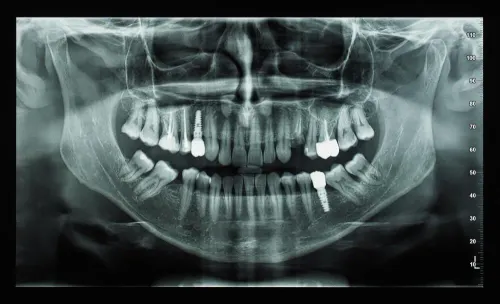
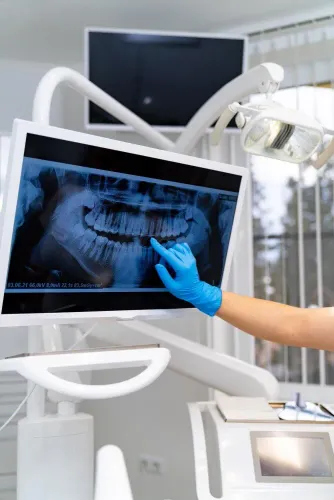
Before consent, planning should begin with a clinical gum assessment, examination of the teeth and bite, dental photographs, and review of the missing-tooth area. A Digital OPG follows when a panoramic view is appropriate, helping assess adjacent roots, jaw structures and the overall treatment site.
| Examination | Information provided | When it applies |
|---|---|---|
| Digital OPG | Two-dimensional panoramic view of teeth and jaws | Straightforward cases where a panoramic image answers the planning questions |
| 3D CBCT scan | Three-dimensional bone width and height, the mandibular or mental nerve in the lower jaw, and the maxillary sinus in the upper back jaw | When this added information will change implant position, grafting or treatment choice |
A 3D CBCT scan is not a routine photograph for every patient. Ask why it is needed and confirm that the lowest suitable radiation exposure will be used. Ask how the proposed implant relates to nearby nerves, sinus anatomy and the final crown; bone too close to either structure may require an alternative plan.
Give the dentist a complete history covering diabetes control, blood-thinning medicines, bisphosphonates or other osteoporosis drugs, pregnancy, smoking, previous radiation treatment and allergies. Before agreeing, request a written plan naming the treating dentist, surgical and restorative stages, possible grafting, alternatives, expected reviews and the person responsible if a complication occurs.
Include the implant system, components and total inclusions in writing.
What will the treatment involve, and how long could it take?
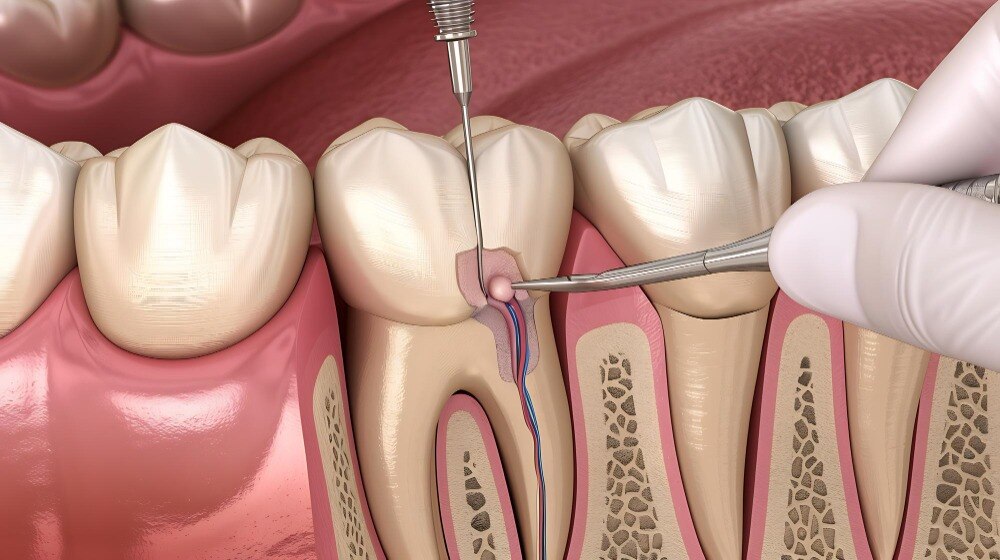
The treatment timeline runs from the first consultation to a separate final crown, not necessarily to a tooth on the surgery date. Your plan may involve extraction, socket assessment, immediate or delayed implant placement, and healing before the restoration is fitted.
- The dentist examines the socket after necessary tooth removal and checks infection, bone walls, soft tissue and implant stability.
- The implant fixture is placed immediately if the socket is suitable, or after healing if infection, damage or insufficient stability makes delay safer.
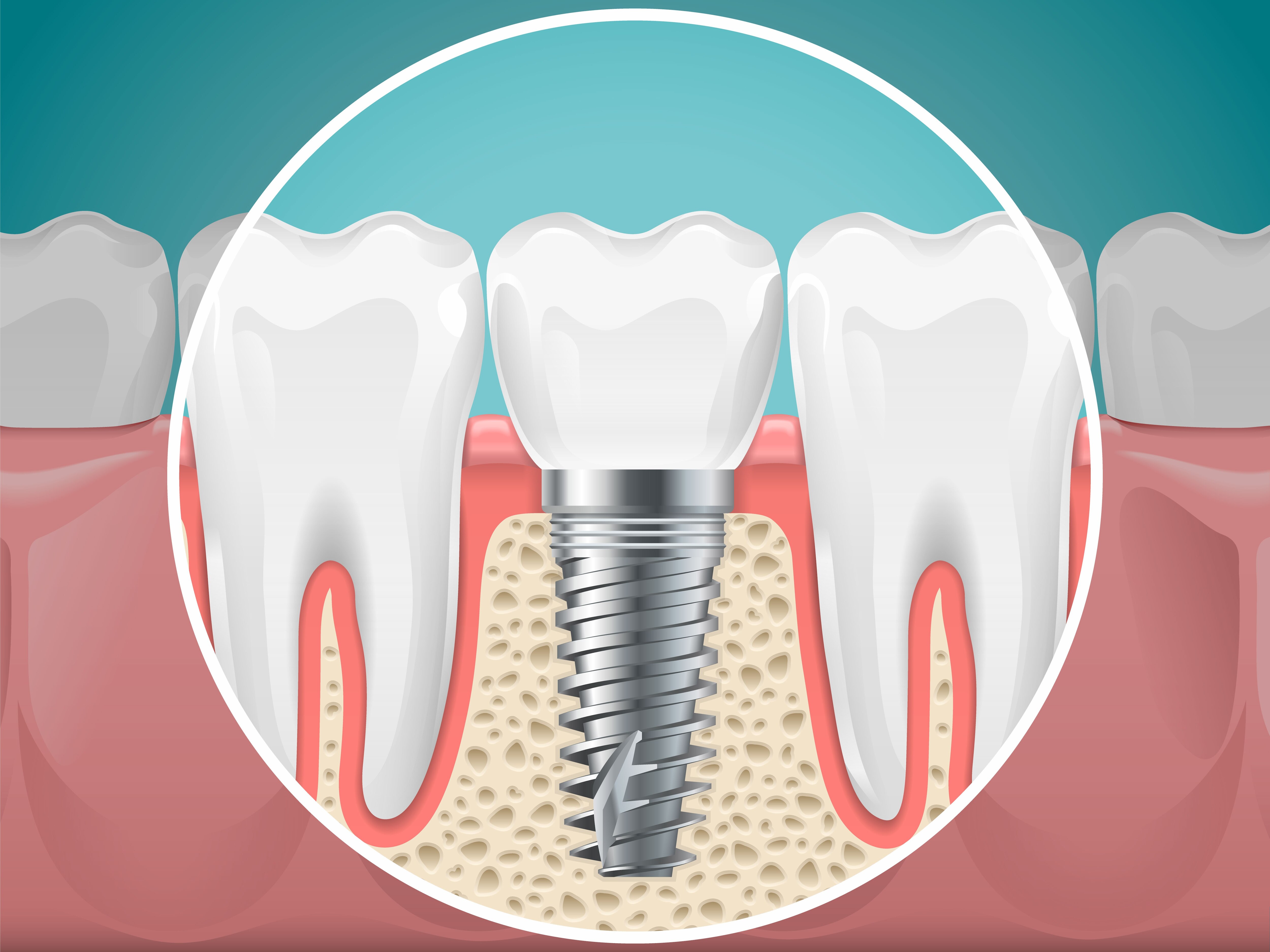
- The fixture heals into the bone through osseointegration before it carries normal chewing forces.
- An abutment is connected after healing, creating the attachment between fixture and crown.
- The laboratory-made final crown is fitted and adjusted for bite and cleaning.
If the ridge lacks volume, bone grafting or ridge preservation uses graft material to rebuild support. A sinus lift raises the sinus lining to create space for bone in the upper back jaw. Either procedure adds cost, healing time and risks such as infection or graft failure, and neither guarantees later implant placement.
Immediate placement does not guarantee a permanent tooth that day; temporary teeth are offered only when stability and bite control allow it.
Ask for the expected healing interval at your site: loading can take several weeks to several months. Plan for local anaesthetic, pressure rather than sharp pain, swelling, softer foods, restricted chewing, time away from work and travel limits. Discuss smoking cessation, infection, nerve injury, sinus complications, peri-implantitis and implant failure before consenting.
How should you compare options, quotes and clinics in Bahadurgarh?
Compare an implant, bridge and denture on what you will live with, not on one headline price. Implant quote comparison must include stability, tooth preparation, cleaning, expected repairs, longevity, maintenance and total cost.
| Option | Stability and preparation | Cleaning and repair considerations |
|---|---|---|
| Implant | Fixed; surgery and bone healing; no preparation of neighbouring teeth | Clean around the crown and implant; screw, crown or bone problems can require repair |
| Bridge | Fixed; usually requires preparation of adjacent teeth | Clean beneath and around the replacement; supporting teeth can need future treatment |
| Removable denture | Avoids implant surgery; may move during use | Remove for cleaning; relining, adjustment or replacement may be needed |
An incomplete quote commonly lists only the implant fixture. Ask for a written price covering:
- Scans, extraction, grafting or sinus lift
- Fixture, abutment, temporary tooth and final crown
- Medicines and every planned follow-up visit
- Implant system name, implant brands and materials, surface design, lot or batch information
- Treatment plan, implant passport or component record, and warranty terms and limitations
- The person responsible for loose parts, complications or referrals
Check the Bahadurgarh clinic follow-up plan: location, appointment frequency, emergency-review access, referrals for grafting or complex surgery, and arrangements if you work or live elsewhere. Ask how instruments are cleaned, heat-sterilised, packaged, monitored and traced; surface disinfectant alone is not equivalent.
Dr Batra's Dental can be compared with other clinics using these questions rather than treatment claims alone.
Related service
Dental Implants At Dr. Batra's Dental Clinic, we offer advanced dental implant treatments to replace missing teeth with strong, natural-looking, and long-lasting... View service → |
What care protects the implant and the teeth around it?
After the crown is fitted, implant aftercare becomes daily maintenance. Brush twice daily with fluoride toothpaste, clean around the implant with interdental brushes or floss aids, and attend scheduled reviews for professional cleaning and clinical or radiographic checks. The surgery date marks the start of maintenance, not the end of treatment.
Plaque-related inflammation can begin as peri-implant mucositis and progress to peri-implantitis with supporting bone loss. An implant does not protect neighbouring natural teeth from cavities or gum disease, so treat bleeding, swelling or gum inflammation promptly.
Ask how each outcome is classified and paid for:
| Outcome | What it means | What to ask |
|---|---|---|
| Implant survival | The fixture remains integrated in bone | Is this separate from crown or tissue problems? |
| Crown chipping | The visible tooth needs repair or replacement | Who pays for repair or replacement? |
| Screw loosening | The crown or abutment connection needs attention | Is adjustment covered? |
| Abutment repair | The connector requires replacement or repair | Which component warranty applies? |
| Gum recession or bone loss | Supporting tissues have changed | Who provides and pays for treatment? |
Seek prompt review for implant warning signs: worsening pain or swelling, pus, fever, persistent numbness, a loose crown or any movement of the implant. Keep the implant passport and component records. Before consenting, ask what happens if the implant fails, which alternative remains available, how often reviews occur and who provides emergency care.
Frequently asked questions
Am I a suitable candidate for a dental implant?
You need enough jawbone volume, healthy gums, stable remaining teeth and a bite that can support the implant. Bone grafting or gum treatment may be needed first.
Which examinations and medical details should implant planning include?
Planning should review your dental and medical history, gum health, remaining teeth, bite and jawbone volume. Ask whether you need dental X-rays or a 3D CBCT scan.
How long does dental implant treatment take?
Treatment includes assessment, any required extractions or grafting, implant placement, healing and fitting the crown. The timeline depends on healing and whether preparatory treatment is needed.
How should I compare dental implant quotes in Bahadurgarh?
Request an itemised quote covering the implant, abutment, crown, scans, extractions, grafting, temporary teeth, follow-ups and repairs. Compare the treating dentist's experience and the clinic's aftercare plan.
How do I care for an implant after treatment?
Brush twice daily, clean between teeth and around the implant with the tools your dentist recommends, avoid damaging habits and attend scheduled reviews. Seek care for bleeding, swelling, looseness or persistent pain.